
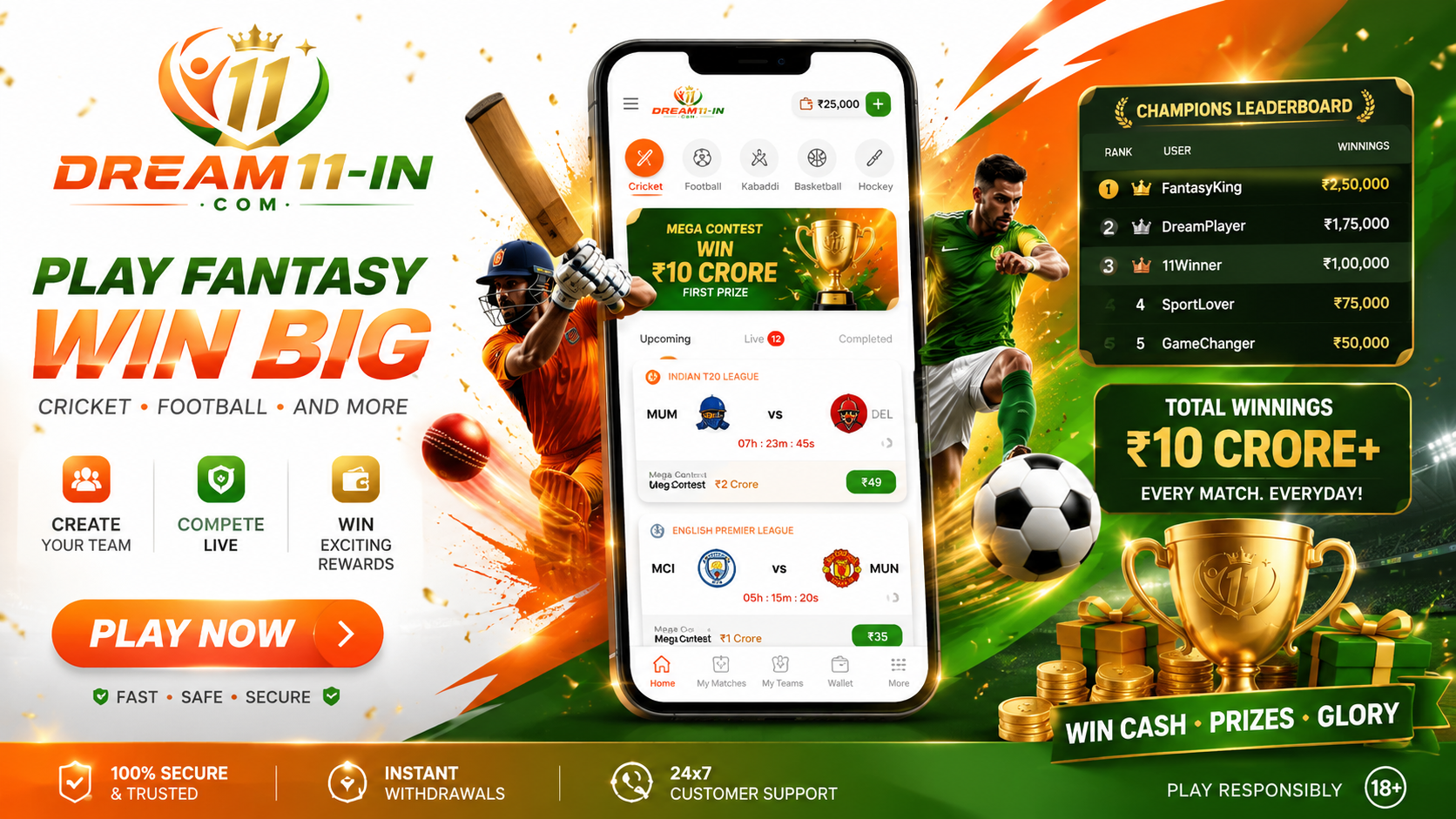
Market-note movement and team news are often read too close together. A number changes somewhere, a match card looks busy, a contest label feels urgent, and the adult reader may treat all of it as one signal. That is a weak reading habit. A calmer check separates what is visible on the screen from what is only a note, rumour, graphic, or personal assumption.
Dream11-IN is an independent screen guide for adults. It does not run paid games, collect payments, process payouts, manage account access, or promise sports results. The useful task here is narrower: read the fantasy sports screen before reacting to match cards, contest labels, wallet prompts, timers, and leaderboard panels.
This note uses the phrase market-note move in a limited way. It means a number or direction the reader has seen in their own notes, not a verified live feed on this site. Without checked source material, it must not be treated as confirmed match information. The better use is to ask: did the screen, the match context, and the team-change cue line up in time, or am I joining unrelated signals?
Briefing point: do not merge every cue
A match card can show sport, match identity, room context, visible prompts, and a time cue. A separate note may mention a change in a line, a price-like number, or a contest expectation. Those two things may sit near each other in your mind, but they are not automatically connected.
The first check is simple: read the visible match name and sport before reading any highlighted number. If the sport, room type, or match card is not the one you meant to inspect, stop there. A number attached to the wrong card is not a useful number.
The second check is timing. A team-change cue seen before you opened the screen is not the same as a team-change cue seen after you entered a contest area. A market-note movement seen after the screen was already pushing quick action is not the same as a calm pre-check. The order matters because pressure changes interpretation.
Working clock: four plain time points
Use a small clock note instead of relying on memory. It does not need exact public timing or any outside feed. It only needs your own sequence while reading the screen.
- First look: when you opened the match card and checked the sport, match label, and room context.
- Team cue: when you noticed any visible player, team, or match-context information that could affect how you read the card.
- Number cue: when you saw a highlighted number, contest amount, entry label, market-style note, or other figure that drew attention.
- Action pause: when you stopped to explain the card in one plain sentence before continuing.
This is not a prediction method. It is a reading order. It helps prevent a late number cue from being treated as if it came before the team cue, and it helps prevent a contest label from being mistaken for confirmed match news.
Executable check before reacting
Use this step sequence when a market-style note and team news appear close together on your screen or in your own notes.
- Write the sport and match card identity in plain words. If you cannot do that, close the card and restart the check.
- Mark whether the team cue was visible on the screen or only remembered from elsewhere.
- Mark whether the number cue was on the contest card, in a personal note, or part of another screen area.
- Ask whether the team cue came before or after the number cue in your own reading order.
- Check whether a timer or urgent prompt is pushing you to skip the explanation step.
- Explain the card in one sentence: sport, match card, visible cue, number cue, and reason for pausing.
- If the sentence is messy, stop. A card that cannot be explained calmly is not ready for action.
The key step is the one-sentence explanation. It turns scattered screen pressure into a readable check. If the sentence depends on a guess, an unverified message, or a number that you cannot place, treat the whole reading as incomplete.
Hypothetical example: team A and team B
Assume a reader opens a cricket match card for team A and team B. The screen shows a contest card with a highlighted number and a time cue. The reader also has a personal note saying that a market-style number moved earlier. No official source is being used in this example, and the teams are not real.
A rushed reading says: the number moved, so the team news must be important. A cleaner reading asks for order. Did the reader first confirm the match card? Did the reader see the team cue on the screen, or only remember it from a chat? Did the highlighted number belong to the same contest card, or to another screen? Was the timer creating pressure?
A usable note might read: Cricket card, team A versus team B, team cue noticed after opening the card, number cue seen before the pause, timer visible, not enough to link the two.
That sentence does not predict a result. It does something more basic. It blocks a false link between team news and a market-note move when the order is unclear.
What to treat as visible, and what to treat as separate
Visible screen information includes what you can read on the match card, contest card, room label, prompt, or panel in front of you. Separate information includes remembered team news, personal notes, forwarded messages, social comments, and any market-style movement that is not directly part of the visible screen you are reading.
Keep the two groups apart. A visible contest label may shape the conditions of that card. It does not prove the reason for a number move. A team cue may matter to your understanding of the match context. It does not automatically explain a change in another note. A timer may show urgency on screen. It does not improve the quality of the information.
When several cues arrive together, start with what the homepage habit already supports: match status, team labels, timer position, visible prompts, and contest labels. Only after that should you compare any outside note or remembered movement.
Short field brief for different sports rooms
Cricket, football, kabaddi, and mixed rooms should not be read as one flat screen type. The visible card may present match context differently. The point is not to build a sport-specific prediction. The point is to avoid carrying a reading shortcut from one room into another.
In a cricket room, a reader may look too quickly at player-card context and ignore whether the match card is the intended one. In a football room, the reader may overreact to a late visible cue without checking the contest label. In a kabaddi room, the reader may treat a small card change as larger than it is because the screen is moving fast. In a mixed room, the main risk is confusing sport identity before reading the number cue.
The correction is the same across rooms: sport first, match card second, visible cue third, number cue fourth, pause fifth.
Wallet and payment prompts are a separate pause
Money-related screens deserve a slower eye. If a balance, card, payment method, or account prompt appears while you are trying to compare team news and a market-note move, stop the comparison. Do not let a payment or wallet prompt become part of your match reading.
Check whether you meant to reach that screen. Do not share private details. Do not follow unknown links. Do not continue if the page feels unclear. A wallet prompt is not team news, not a contest explanation, and not a reason to rush.
Applicable limit of this method
This method does not confirm schedules, squads, injuries, scores, prices, or market movement. It does not claim access to official feeds, live databases, account systems, or bookmaker screens. It only helps an adult reader organise what is visible and what is merely noted elsewhere.
If current match facts are required, they need a reliable, dated source outside this screen-reading note. Without that source, do not write the information as fact, do not treat a number move as verified, and do not attach a cause to team news.
The method is most useful when the screen feels urgent, the match card is dense, or a highlighted number is pulling attention away from basic context. It is least useful when the reader is already trying to prove a view they formed before opening the card.
Exit signal
Leave the card when you cannot say what changed first: the team cue, the number cue, or your own intention. Leave when the card can only be explained with guesses. Leave when repeated checking, late-night reading, or timer pressure starts deciding the pace.
A calm screen read is not about finding certainty. It is about refusing to join unrelated signals. Match card first. Visible context next. Number cue after that. Pause before action.
Responsible entertainment note: This article is for screen reading and risk awareness only. It does not provide betting advice, account service, payment handling, outcome prediction or any guaranteed result.